Table of Contents
Case Study
FindCreator
Reading Time:
5 Minutes
Project Type:
Freelance Client Project
Time Line:
May 2025 - Present
Role:
UX Designer
Tools:
Figma, FigJam
Outcome:
Desktop Web

Launching FindCreator,
An AI-Powered Search Tool
Two entrepreneurs approached me to design FindCreator’s MVP, an AI-powered influencer discovery platform built to help marketers find the right Instagram creators faster.
Why This?
The Stakeholders’ Motivation
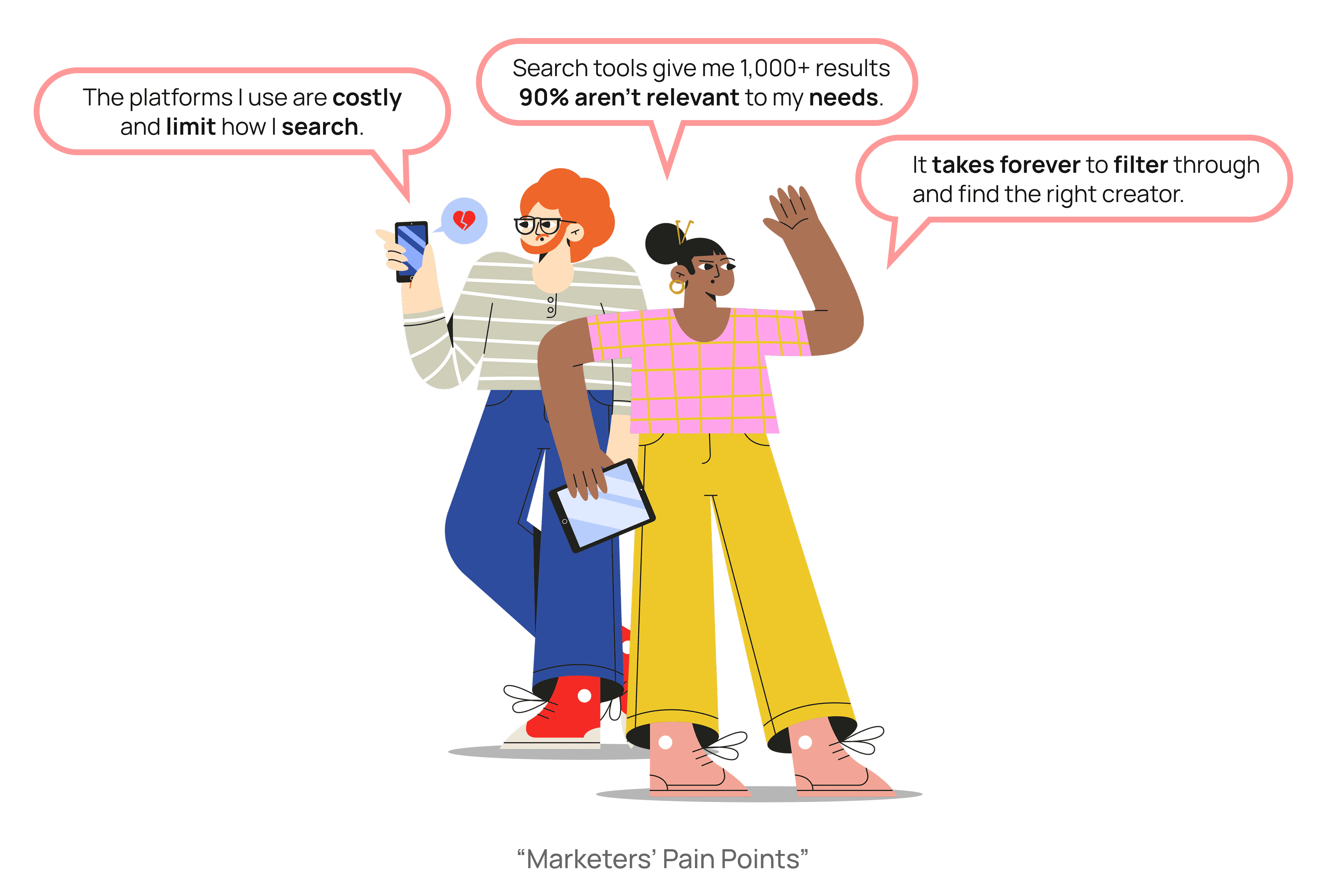
In their marketing work, the founders saw how much time and effort marketers waste searching for the right influencers.
This frustration led to FindCreator, an AI-powered platform designed to deliver more accurate matches and expand creator discovery.
What We Built:
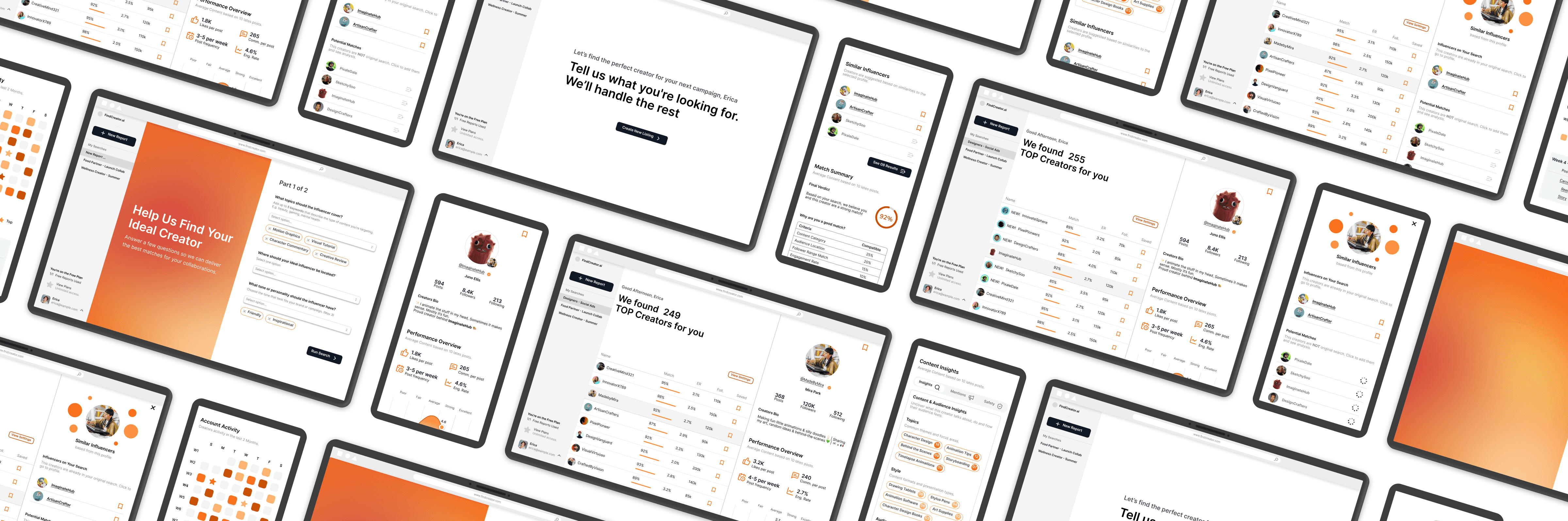
A desktop platform designed to simplify influencer discovery through:

Quick Onboarding
Log in with Google and answer a short questionnaire (for stakeholder insights)

Discovery Setup
Define campaign goals and ideal creator profile for accurate matches.

AI-Powered Matches
Get curated creator recommendations with verified performance data.

Similar Creator Suggestions
Discover new creators and see if they align with your vision.
Project Constraints
Working with a startup client meant there were some specific requirements I had to follow:
Small team - three members (designer + 2 engineers).
Tight timeline and budget.
Front-end requirement — had to use Tailwind CSS.
Data scope — focused only on Instagram creator data.
Brand requirement — orange was the set primary color.
My Role:
As the only product designer, I:
Led the end-to-end design from research and user flows to high-fidelity MVP handoff.
Drove creative solutions by proposing features, designing interactions, and refining flows.
Built the brand and UI system while collaborating closely with the founder and engineers.
Step 1: Discovery
Making Strategic Choices
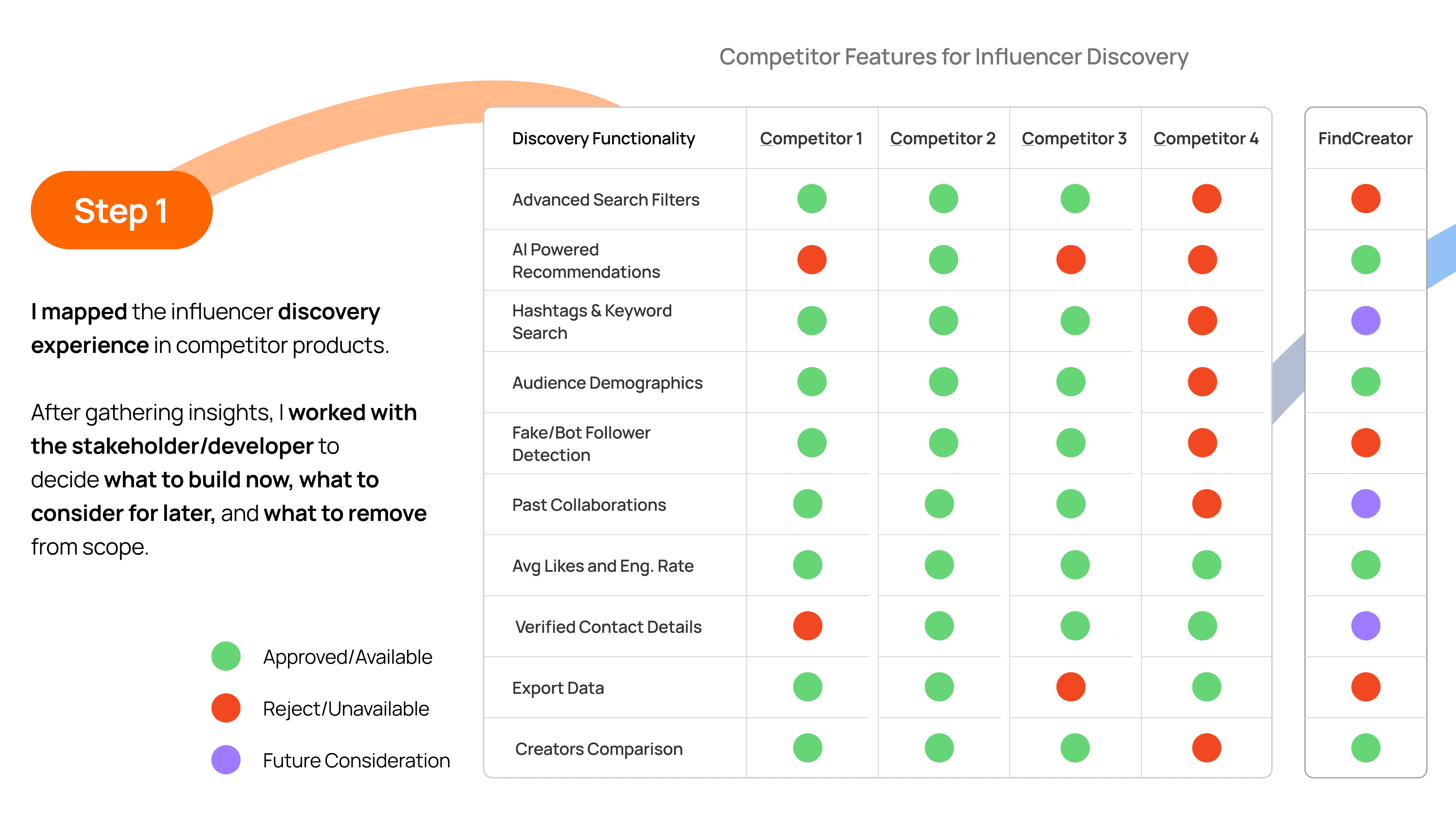
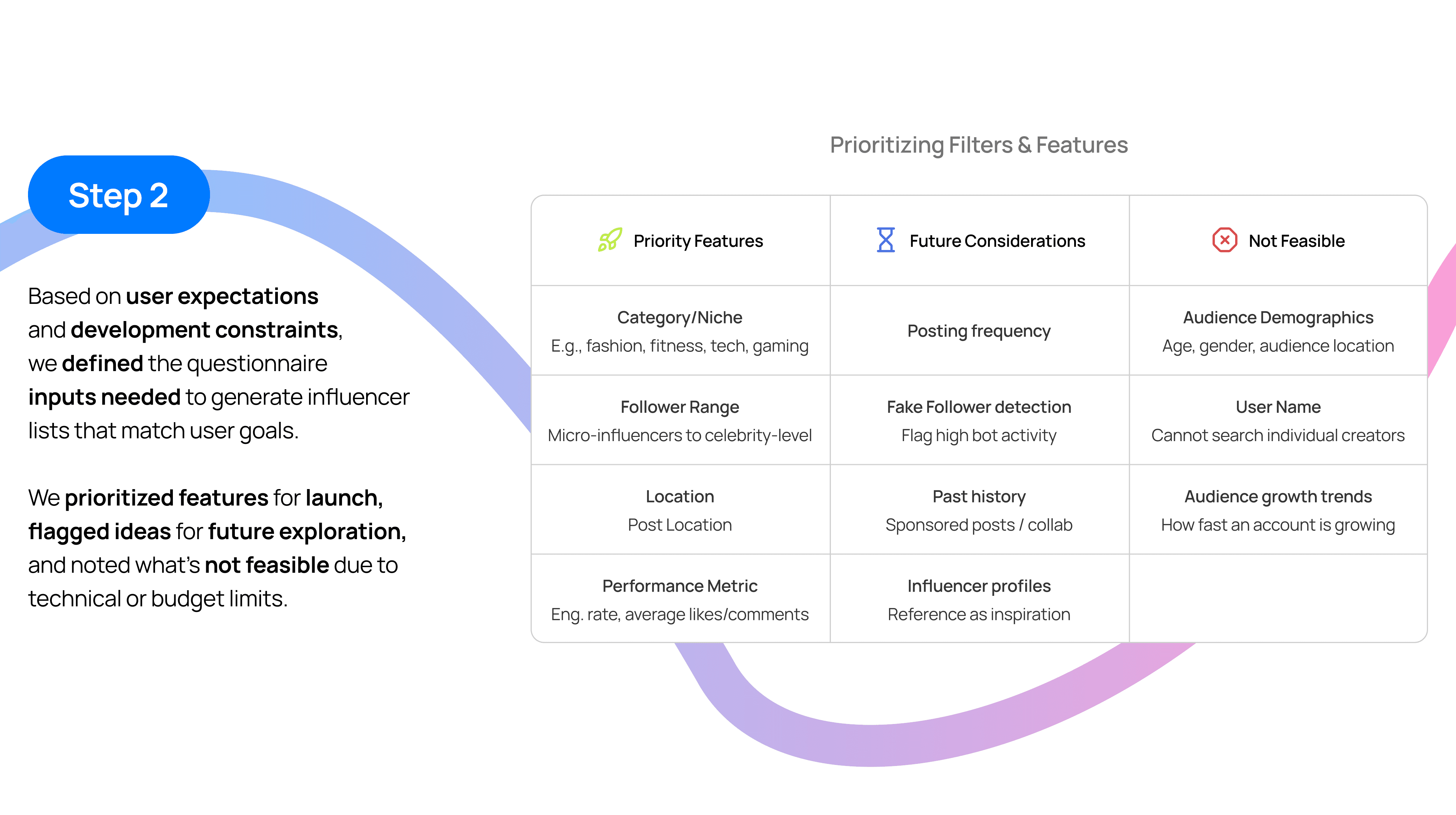
To design the influencer discovery experience, I first needed to understand what marketers were already using, the tools, the features they expect, and the steps they follow to find the right creators.
What I did:
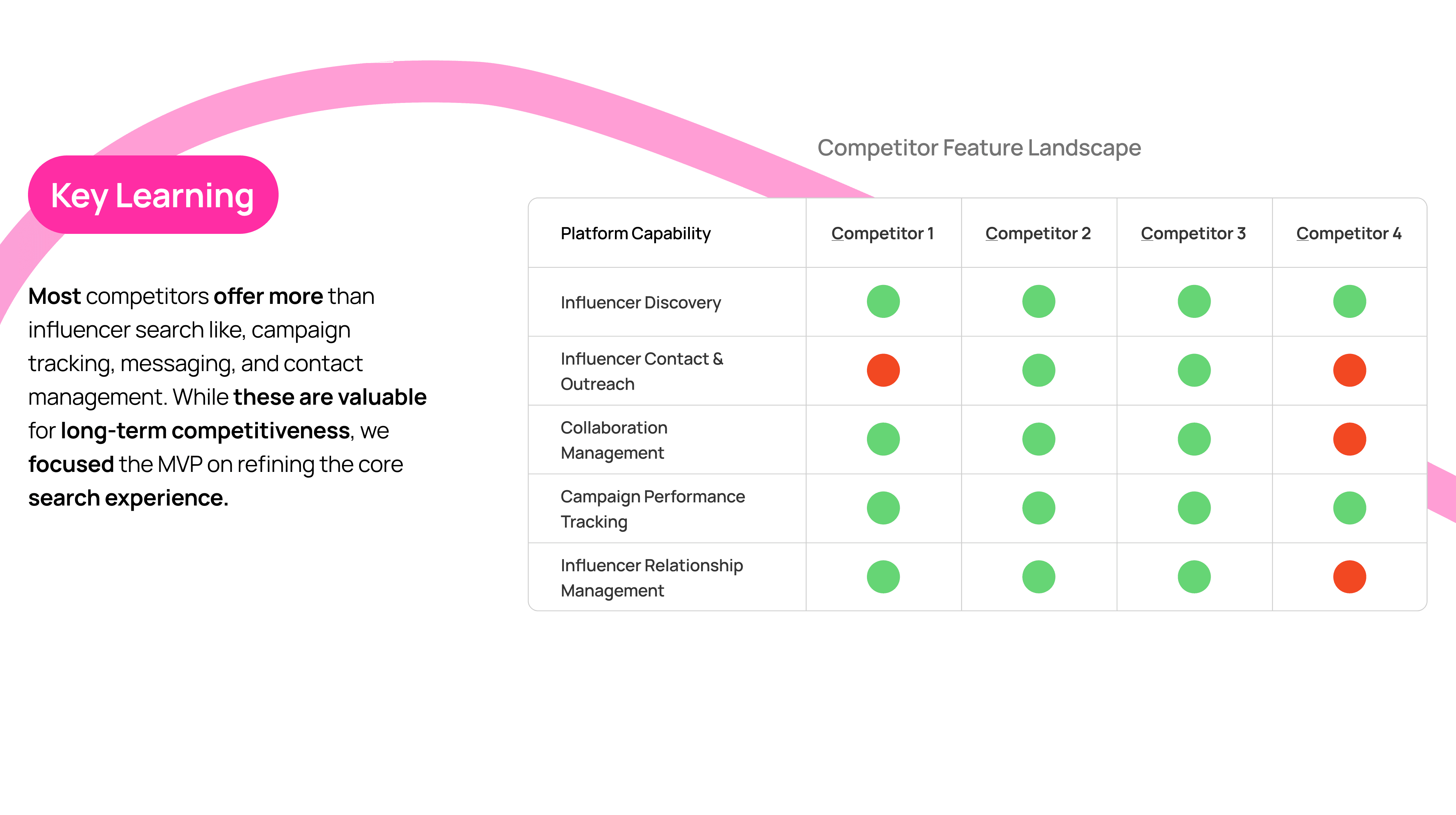
Conducted a competitor analysis on four leading influencer search platforms.
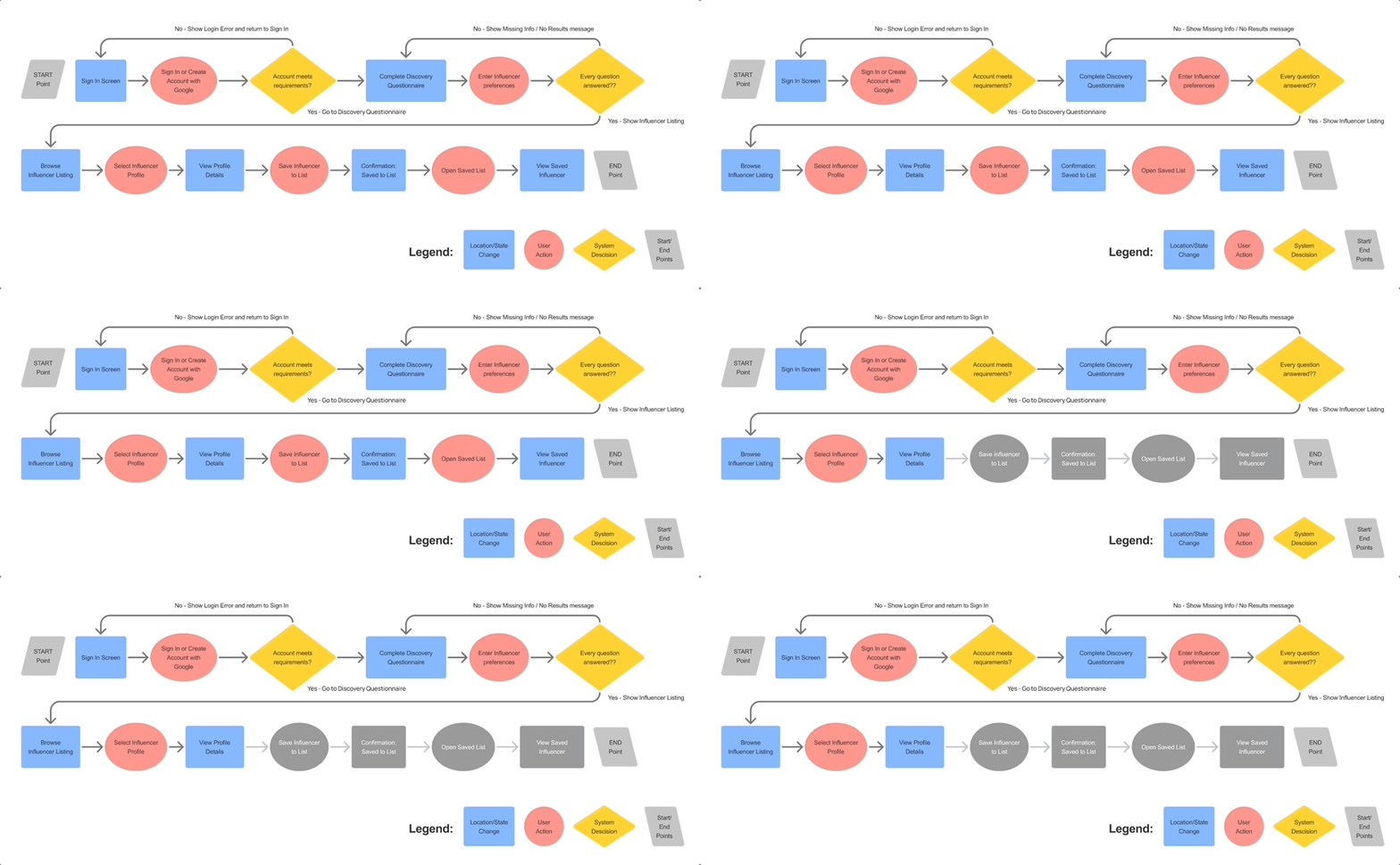
Mapping the User Flow
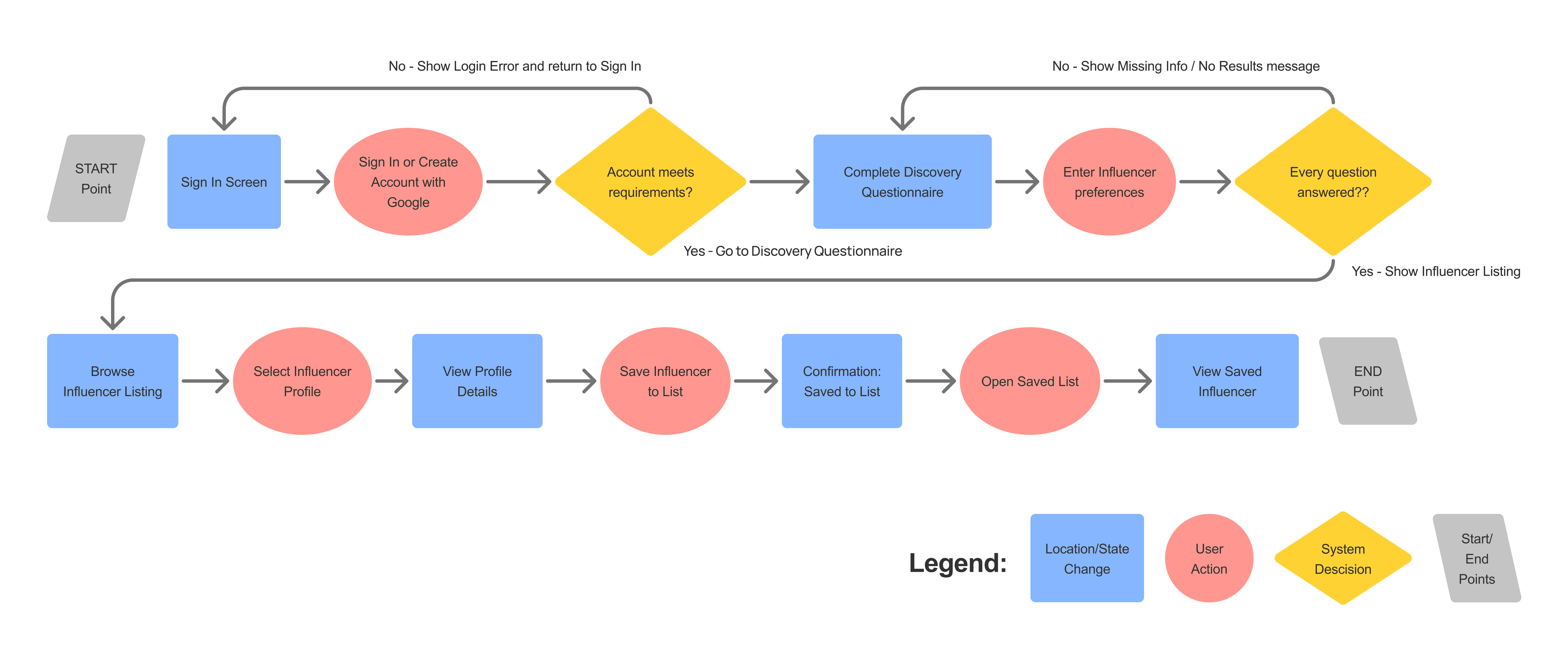
To keep the team aligned, I mapped the user’s journey from start to finish. This gave us a clear view of the scope and sequence, making it easier to work on different stages at the same time.
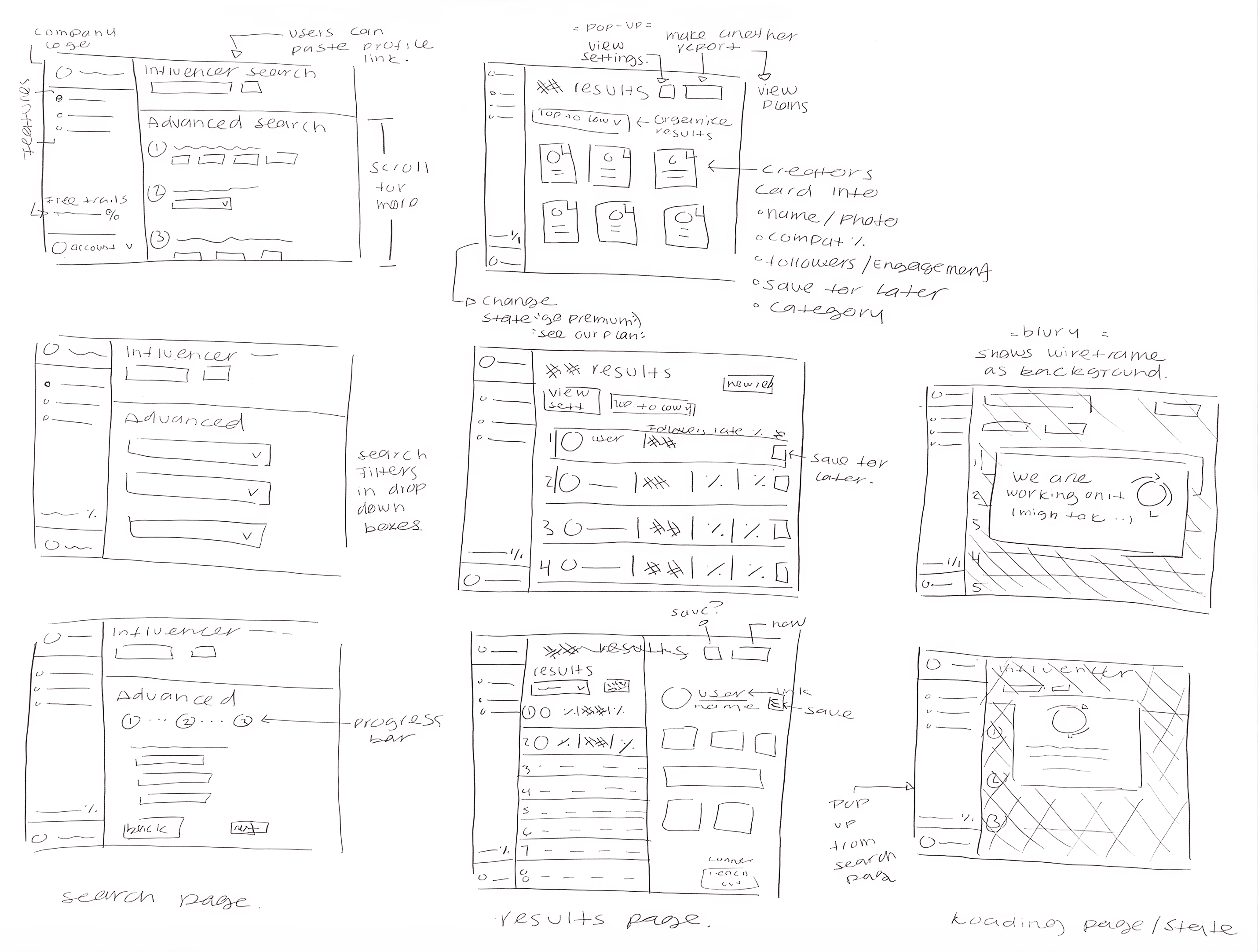
Low Fidelity Prototype
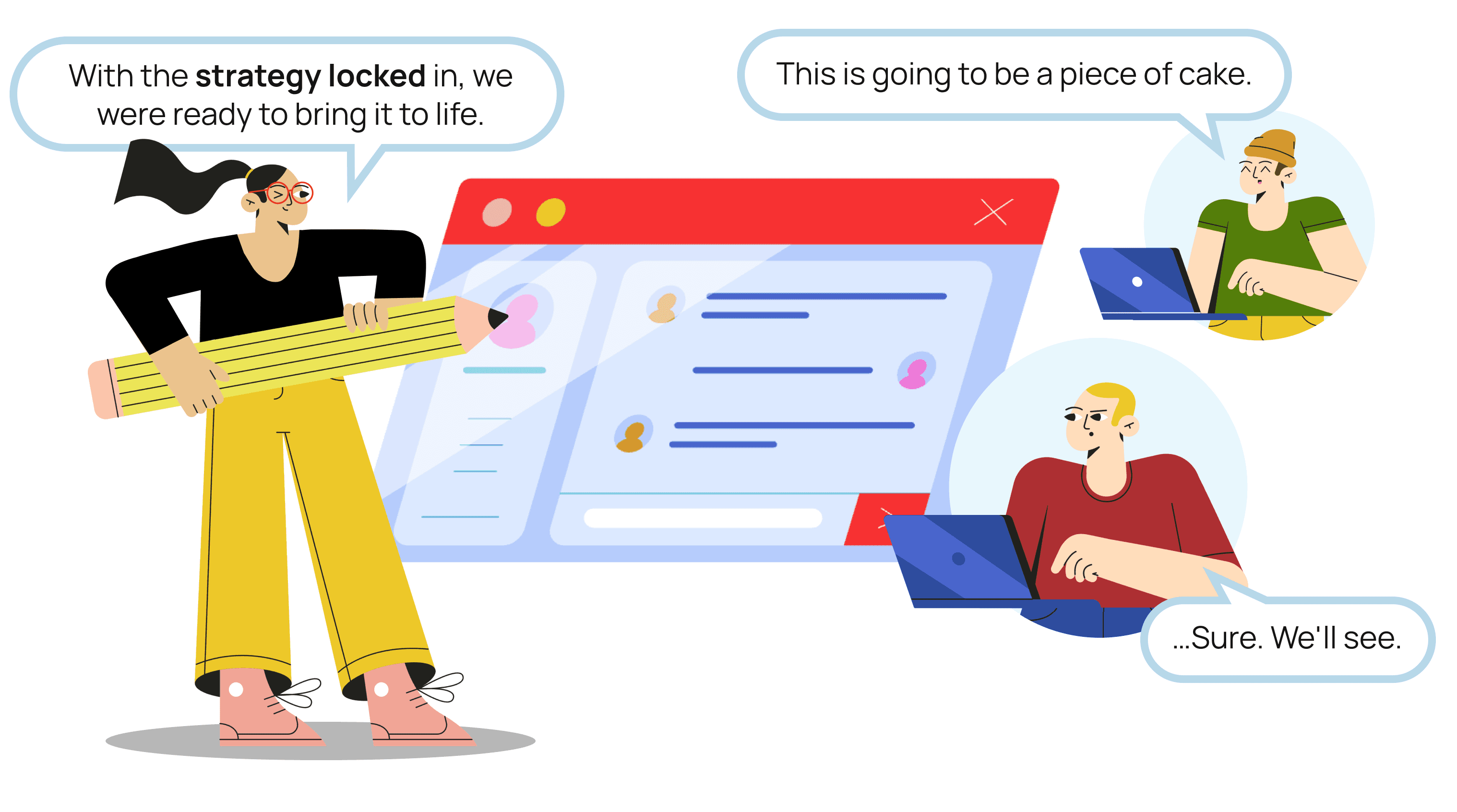
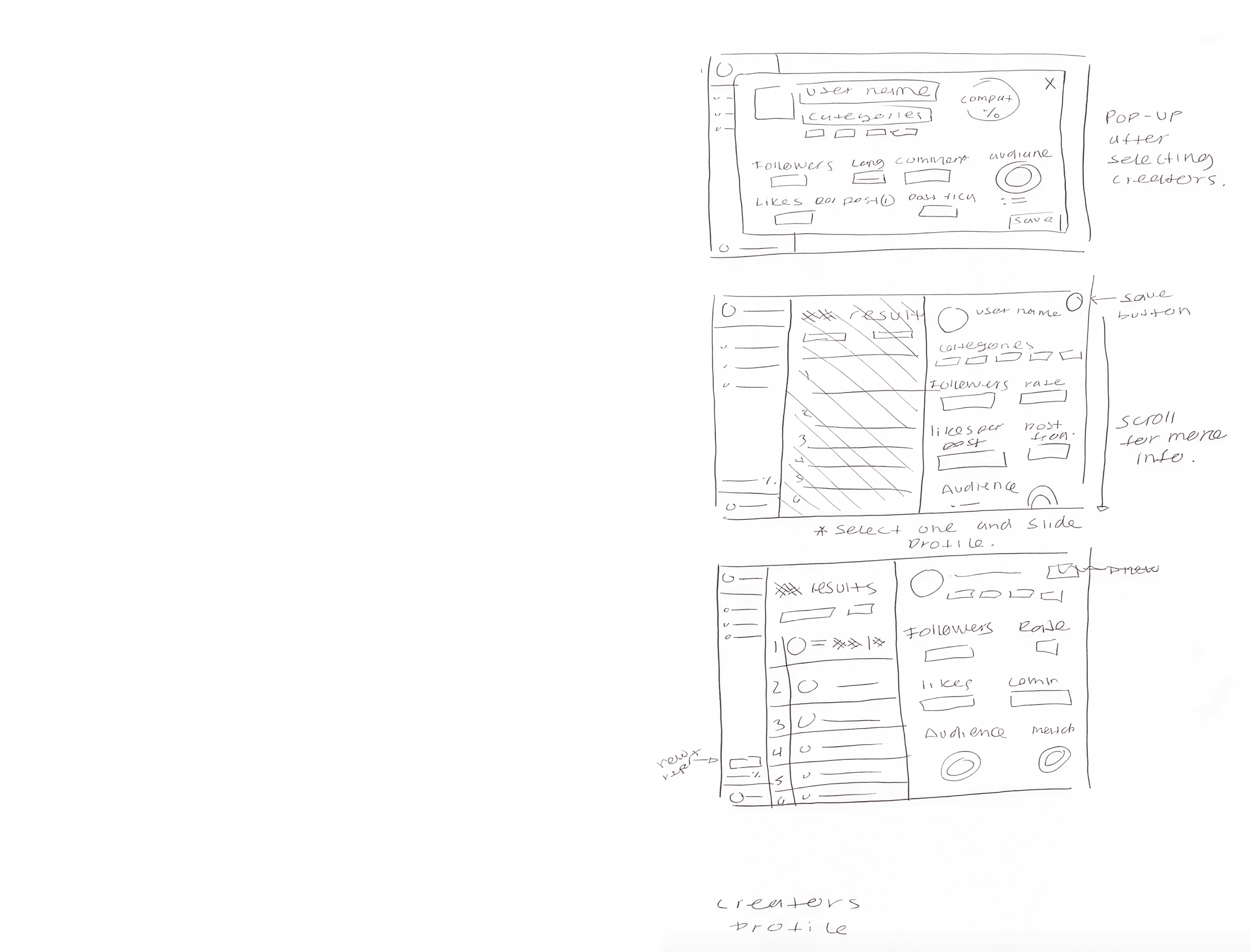
Using these sketches, I created an interactive prototype and shared it with the developer and stakeholders for feedback.
Before: Feedback Highlights
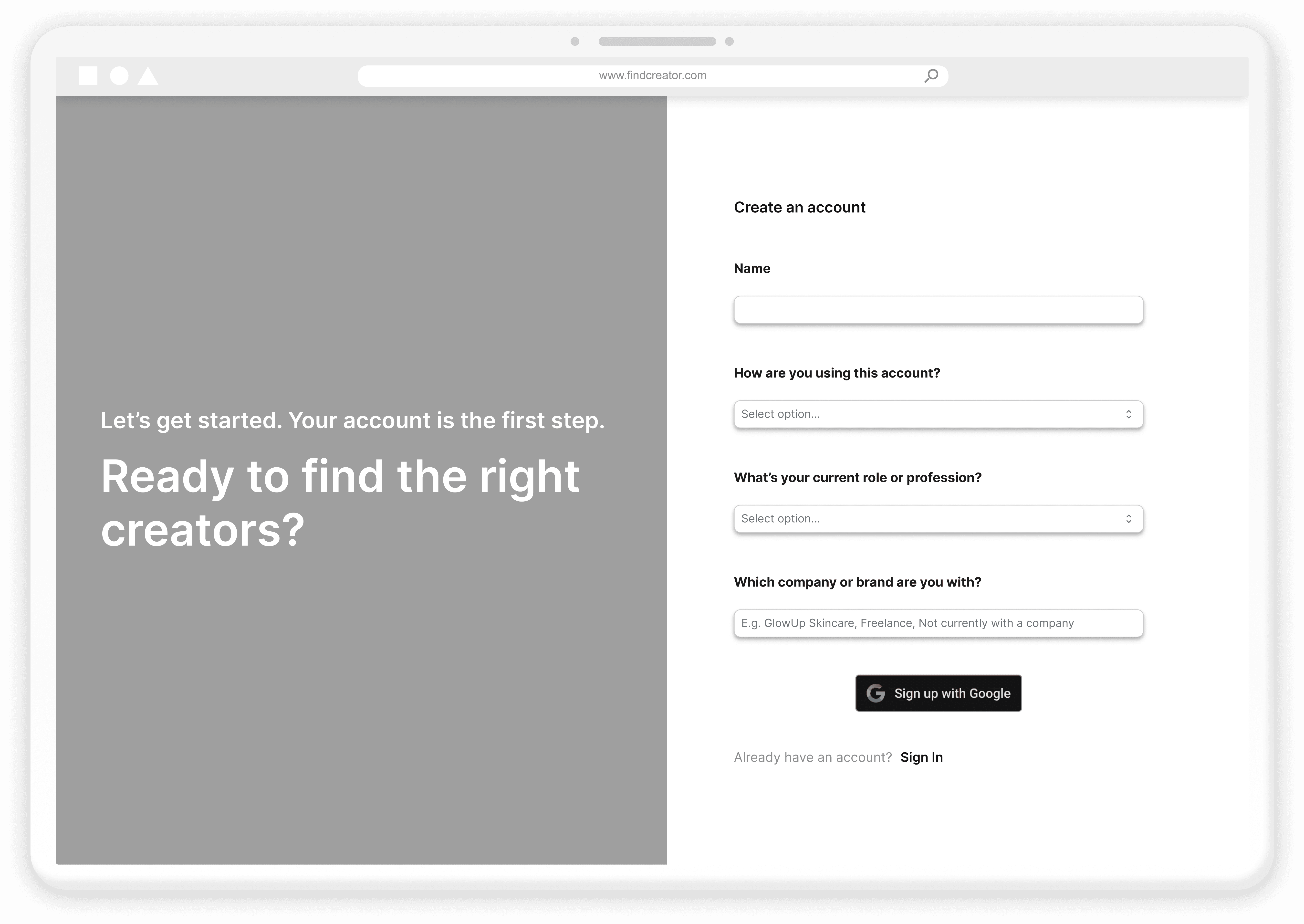
Split the onboarding and business questionnaire into two separate steps
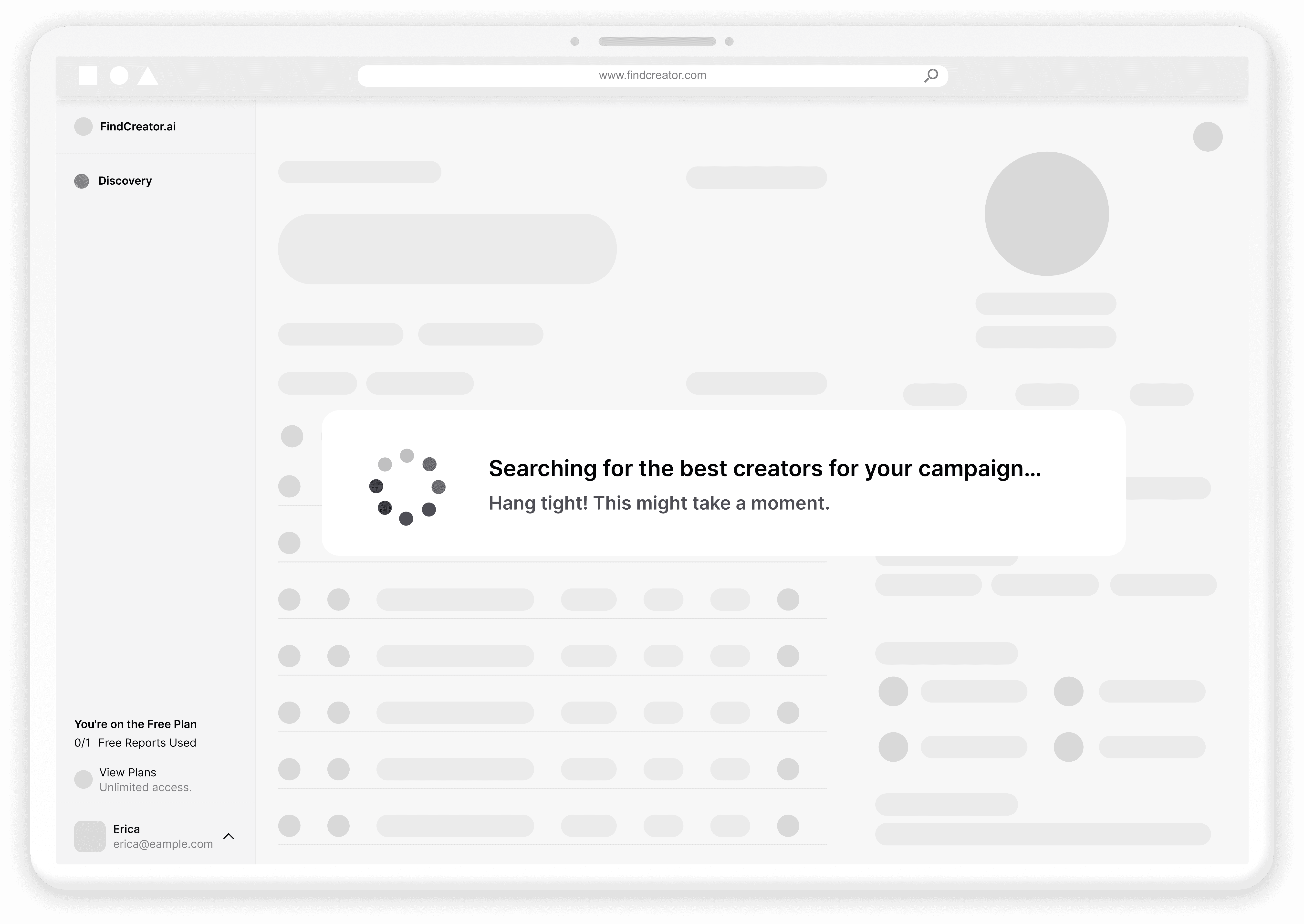
Redesign loading experience so users can browse listings while results load.
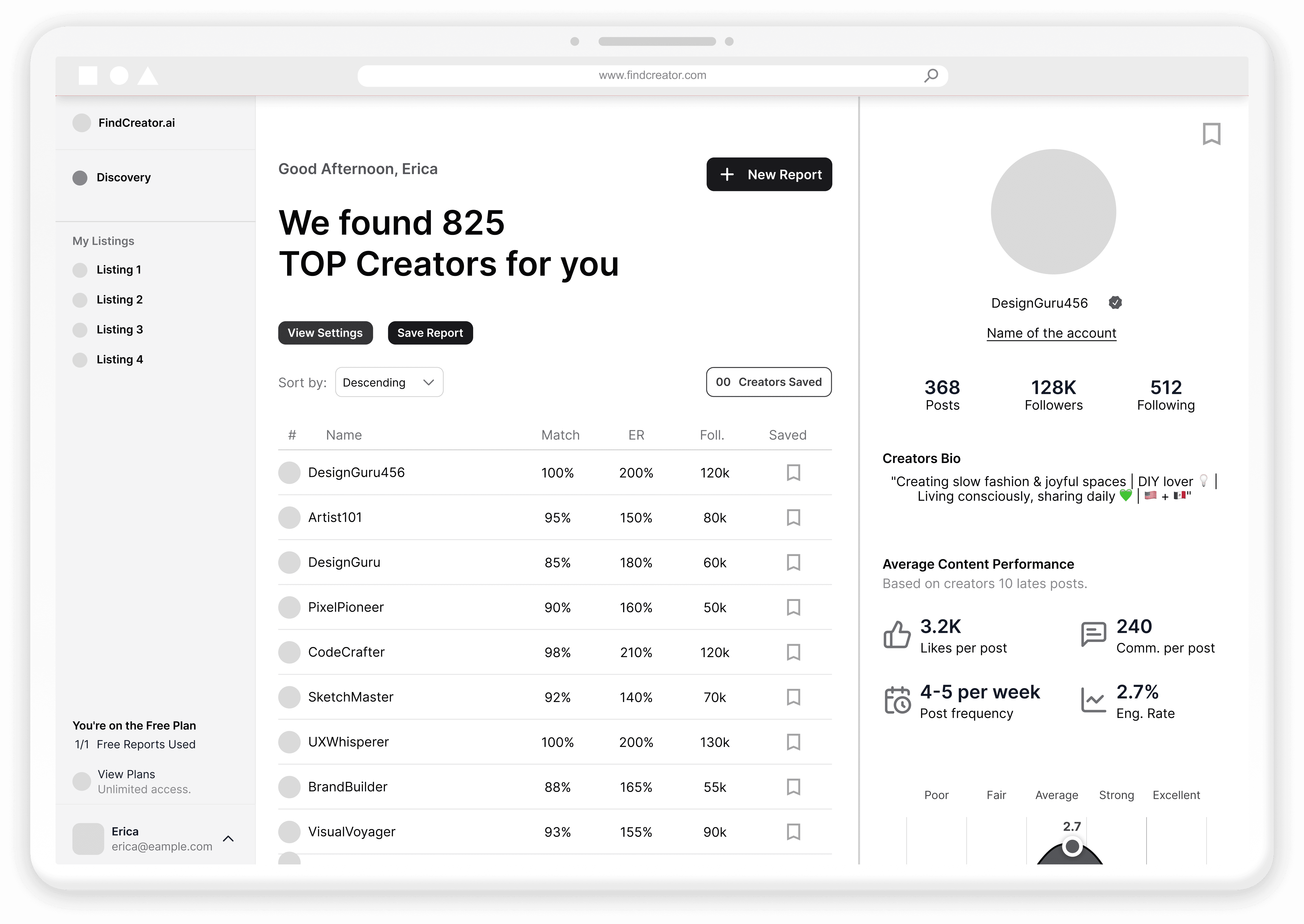
Replace static match % with a progress bar; remove “Sort by” for now.
After: Updated Screens
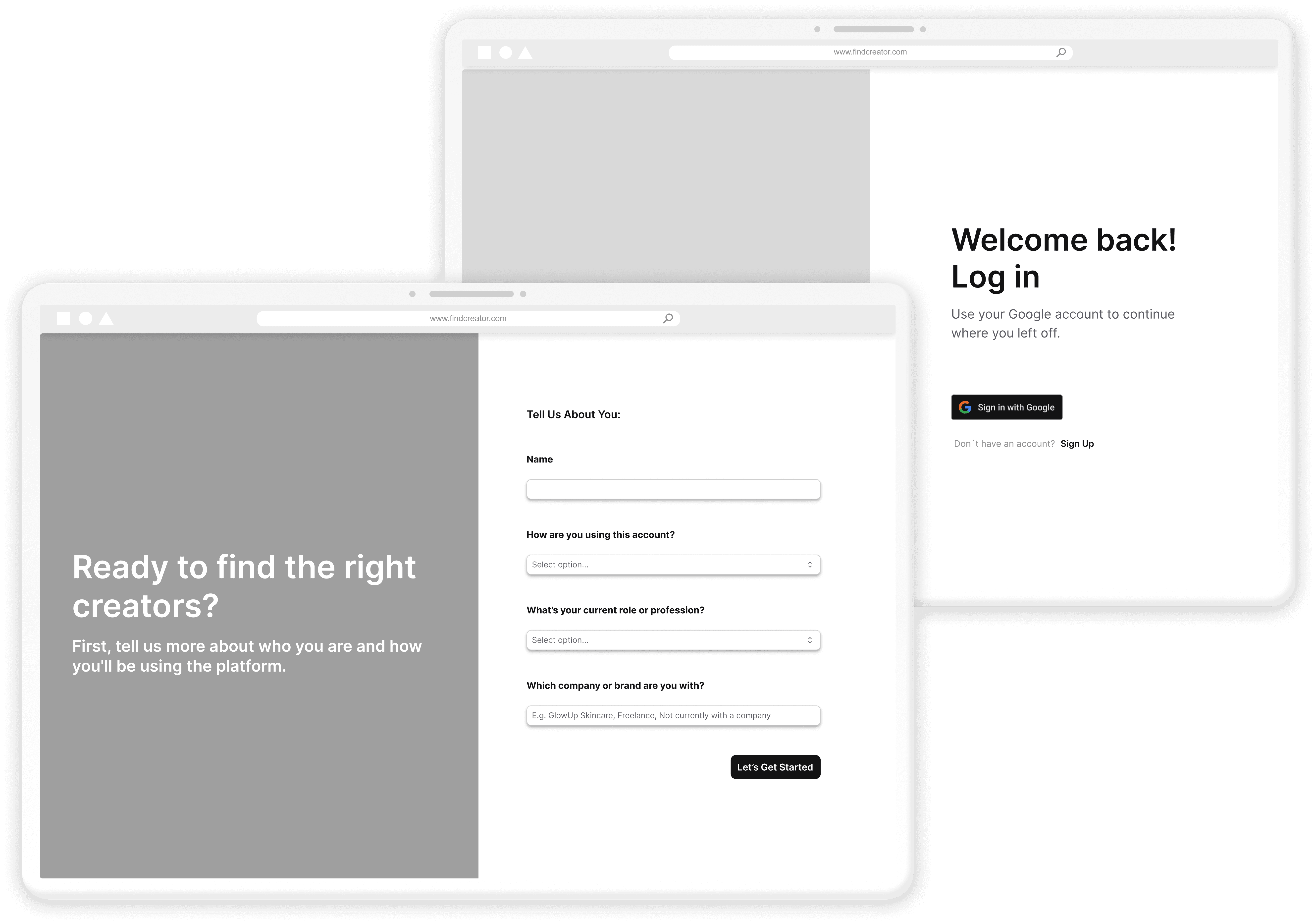
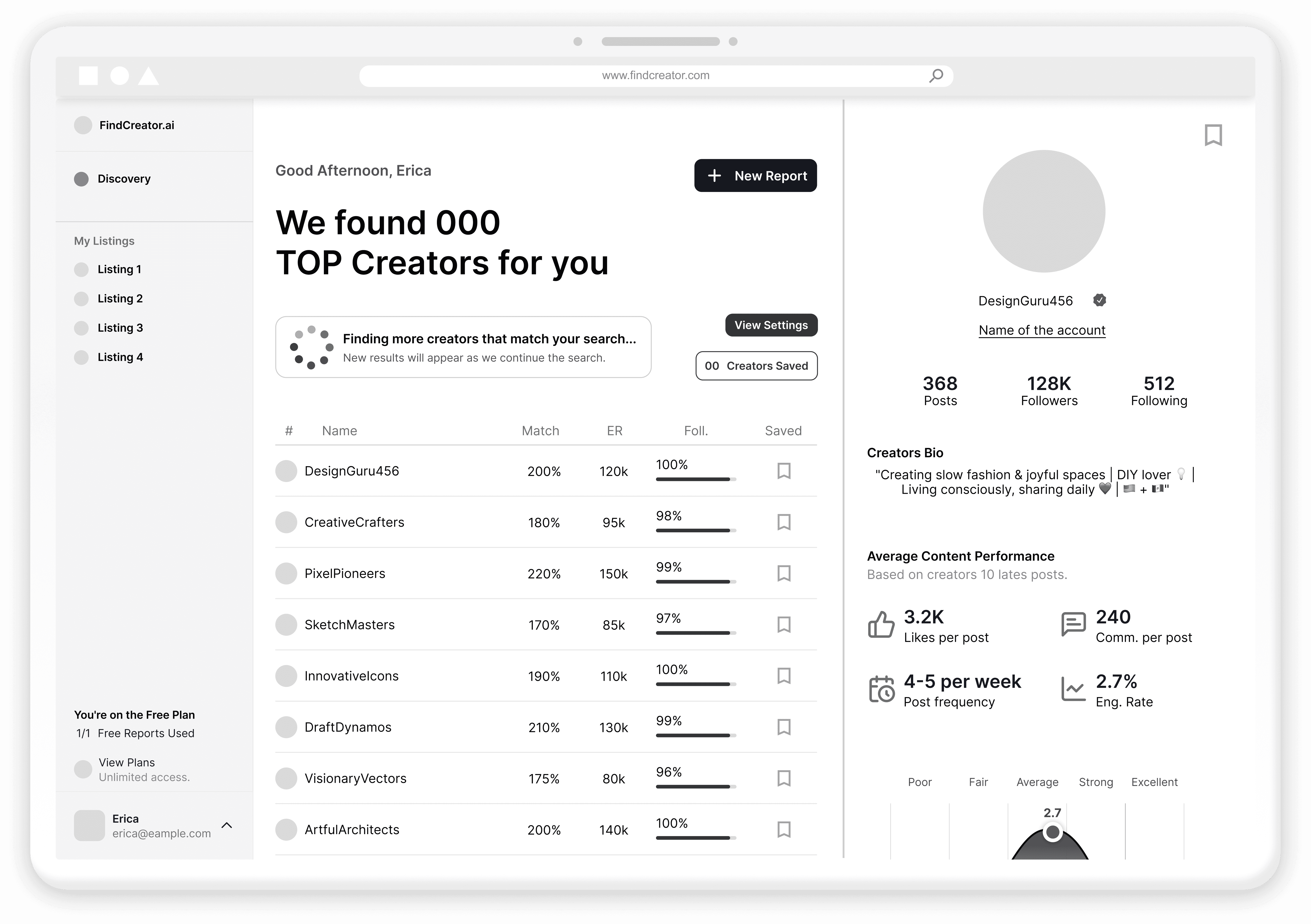
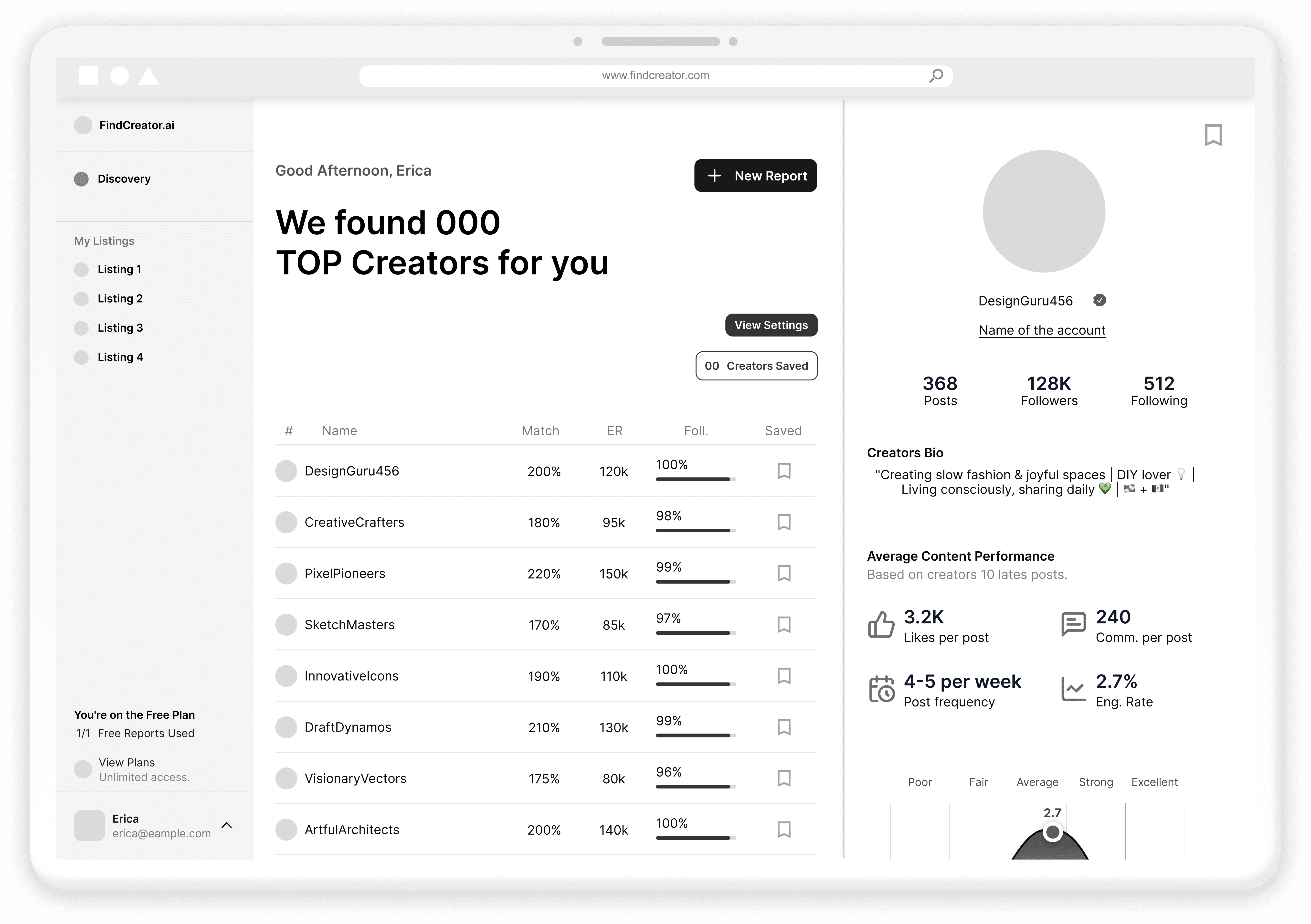
With these changes in place, the prototype was ready for user feedback.
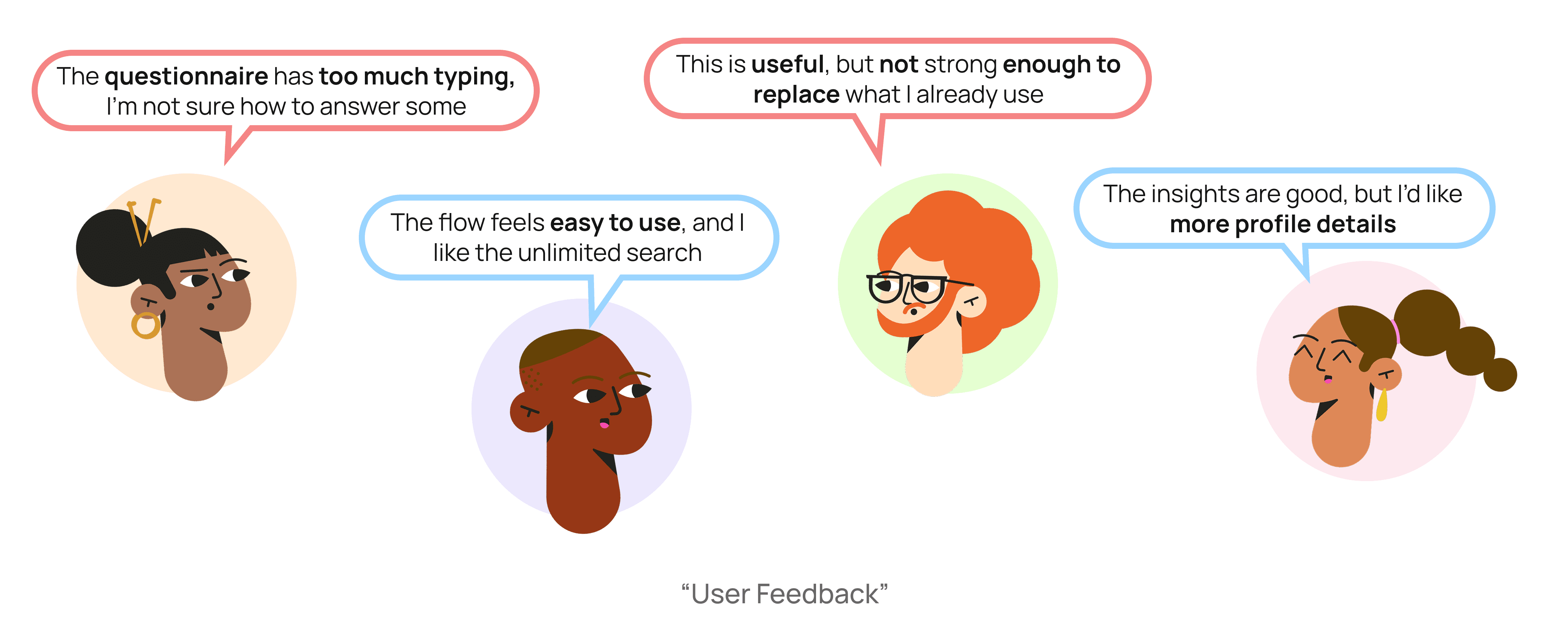
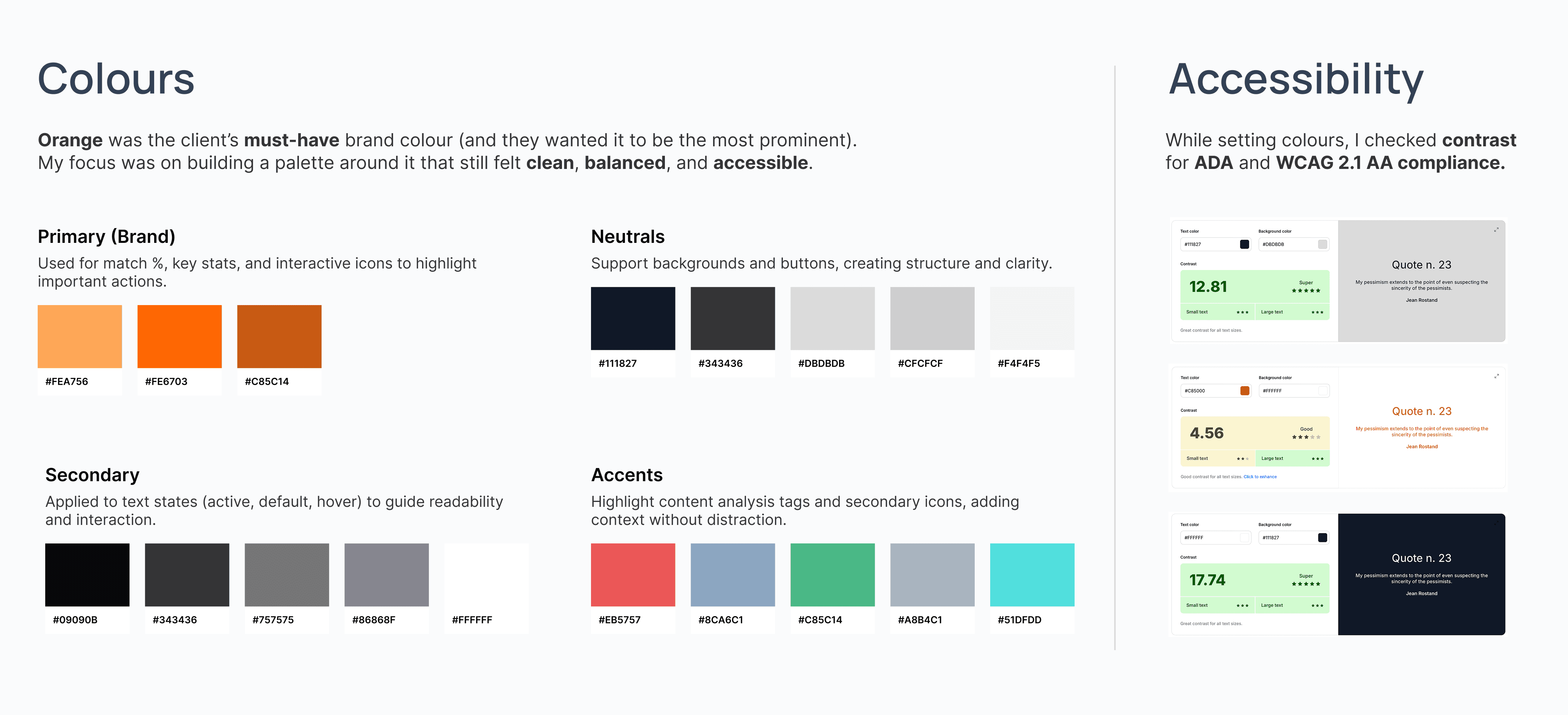
Designing the Visual Identity and Design Systems
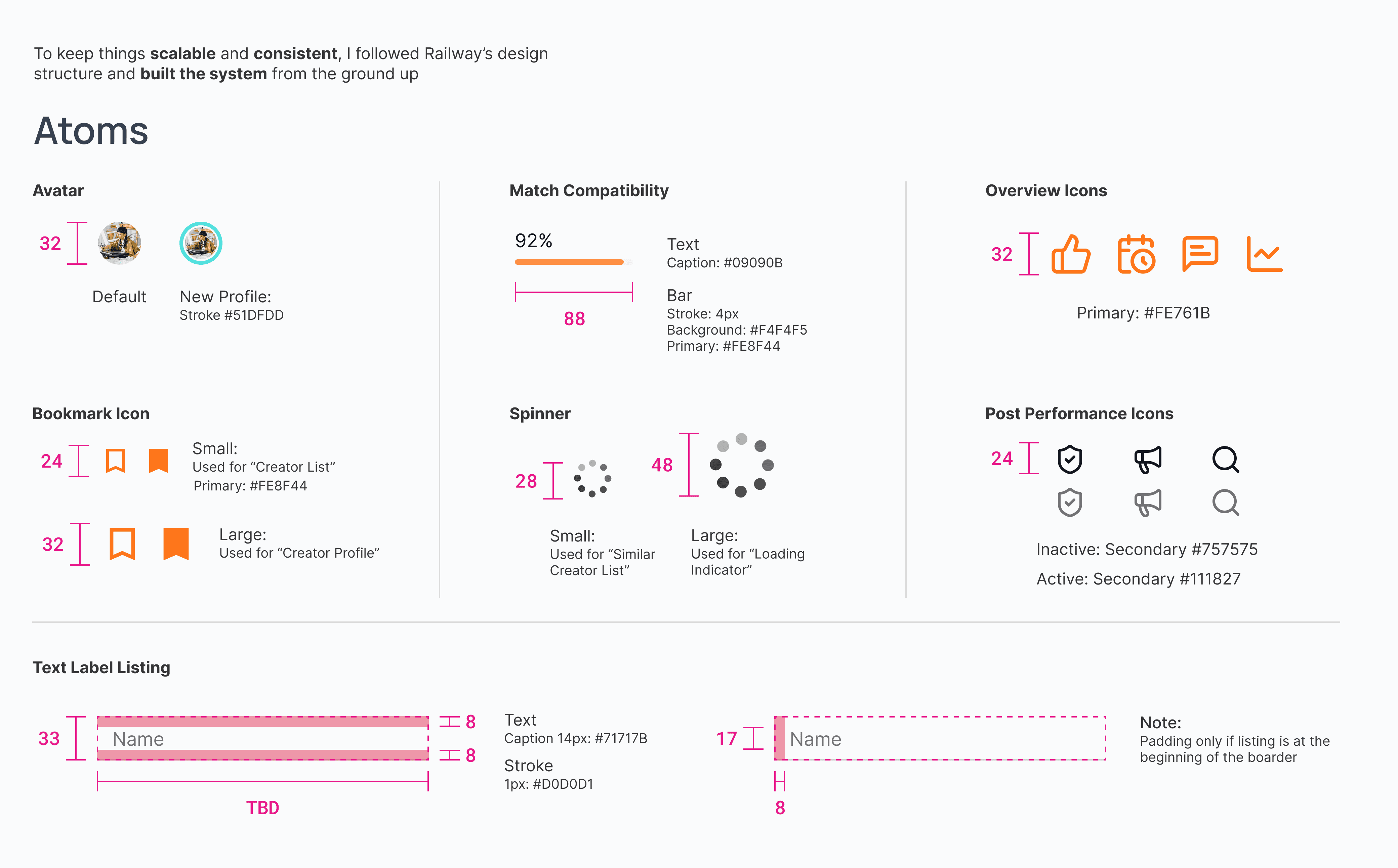
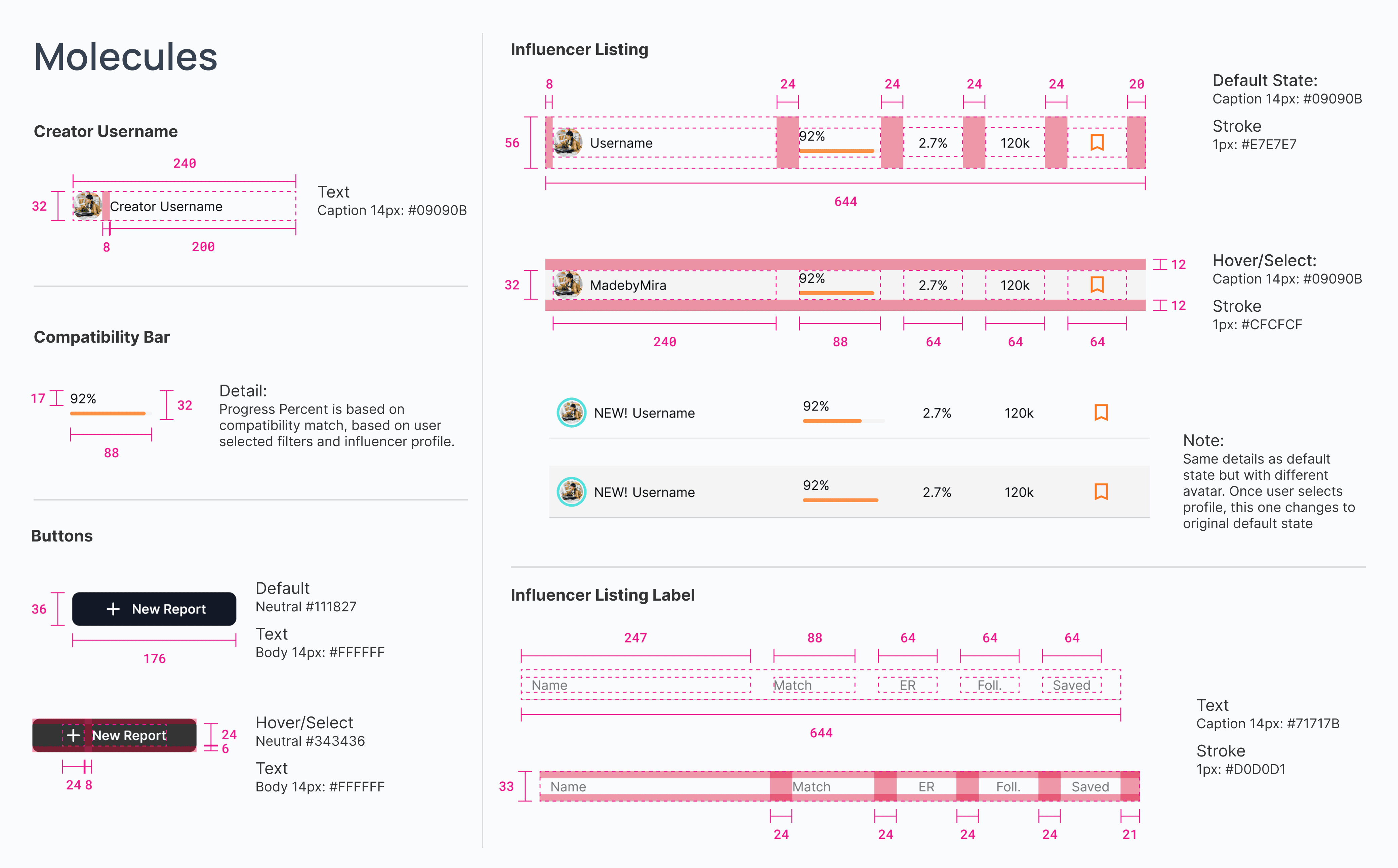
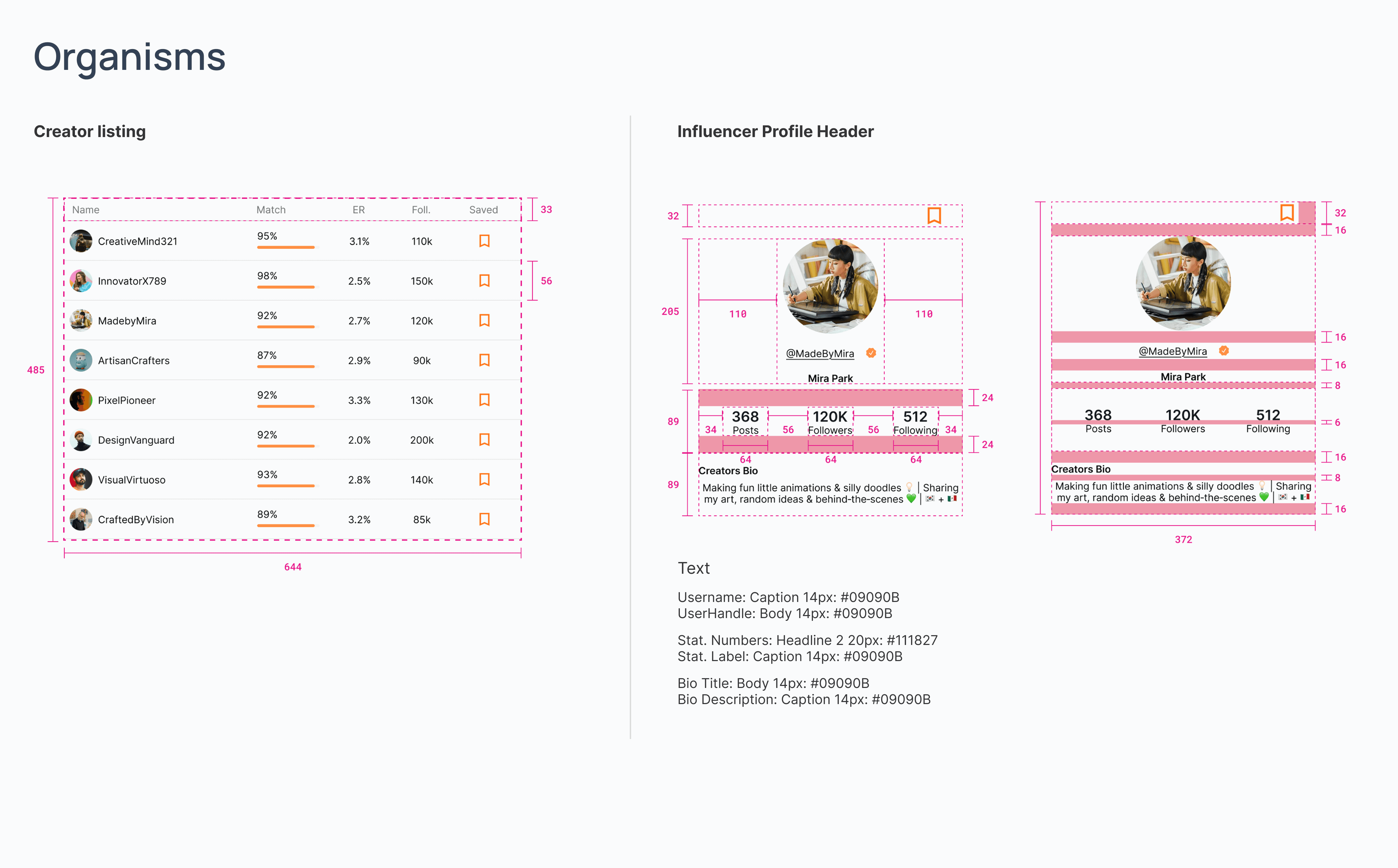
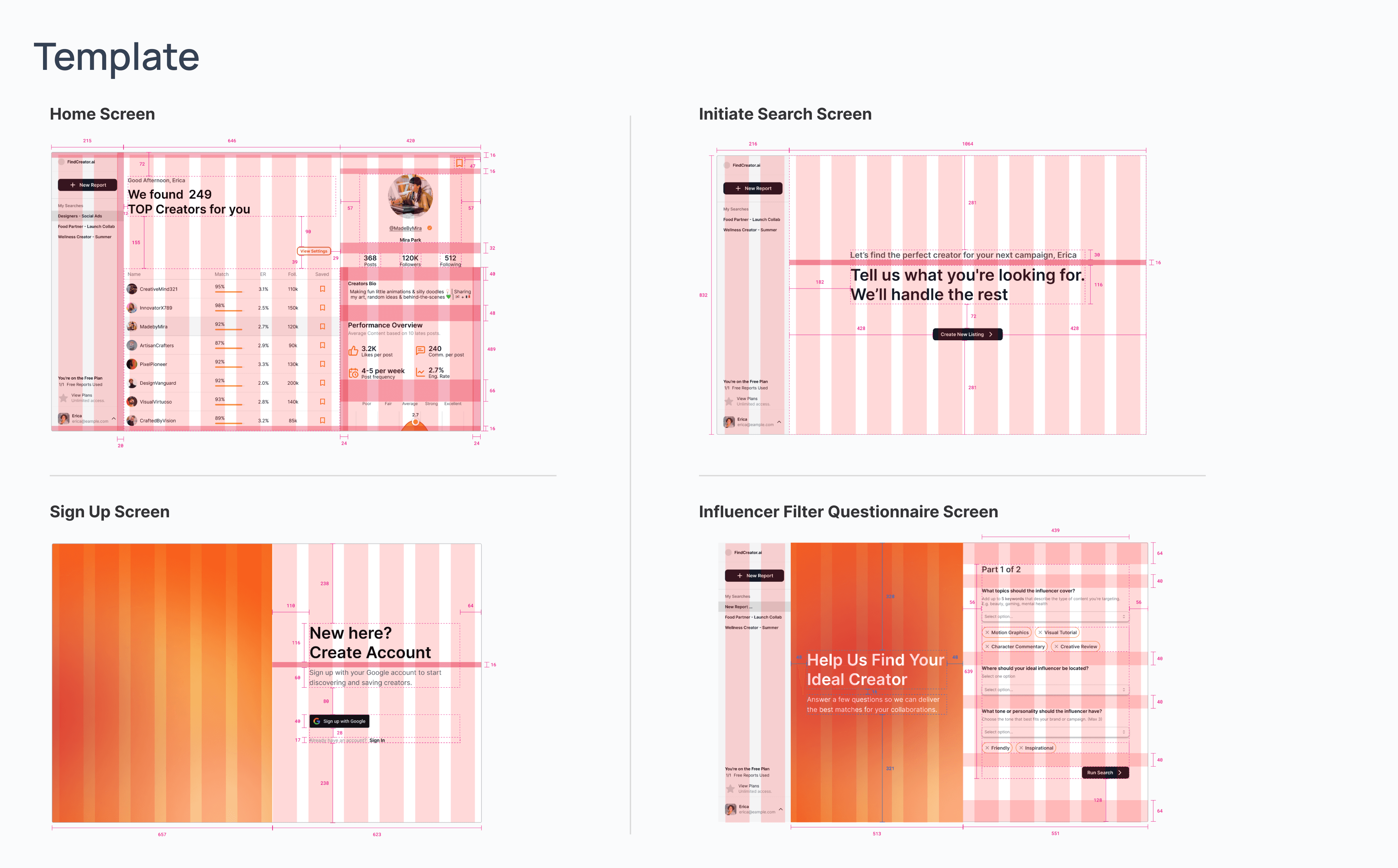
To prepare for high-fidelity work, I built a scalable design system. This ensured our screens stayed consistent, accessible, and easy to hand off to developers as we refined features.
Visual Identity
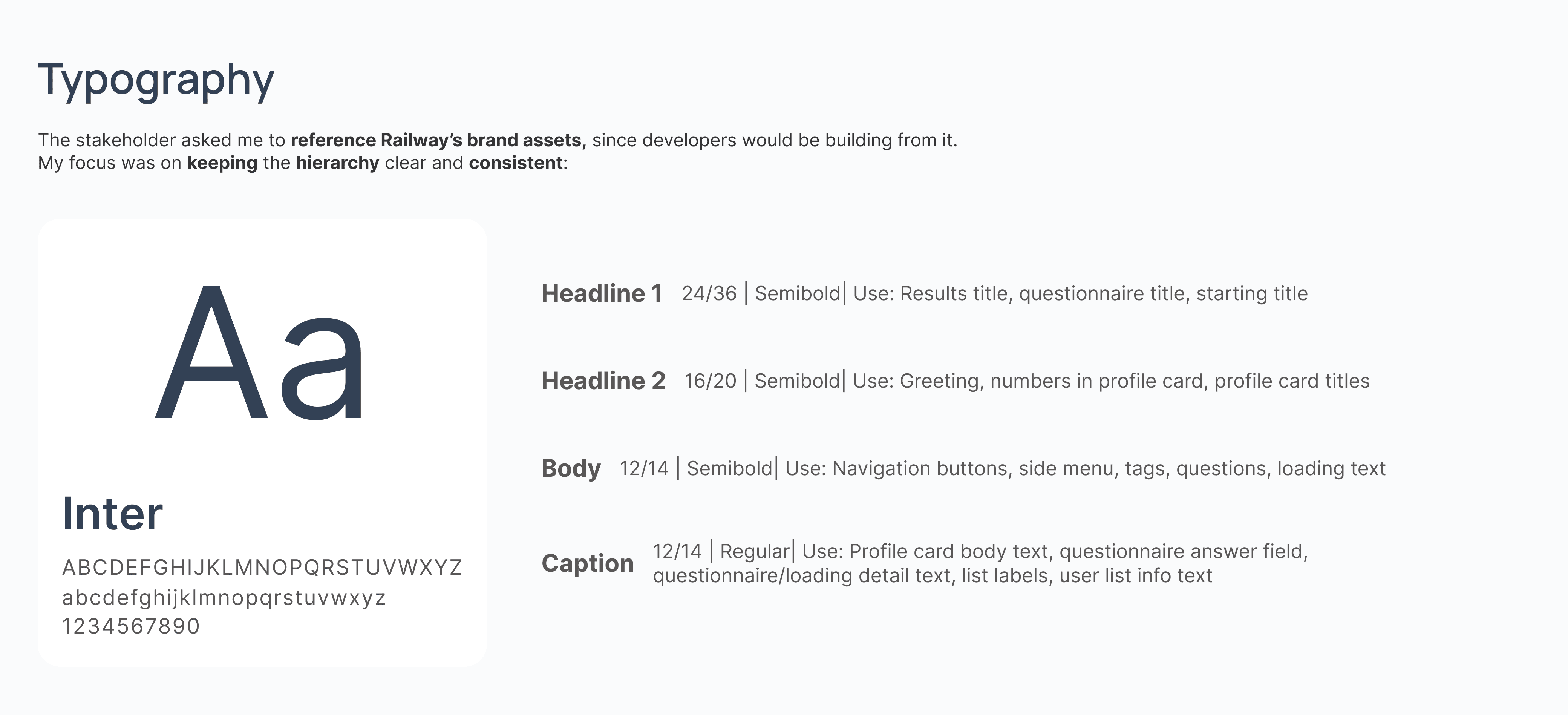
Design Systems
Step 3: Refinement
Shaping with Feedback
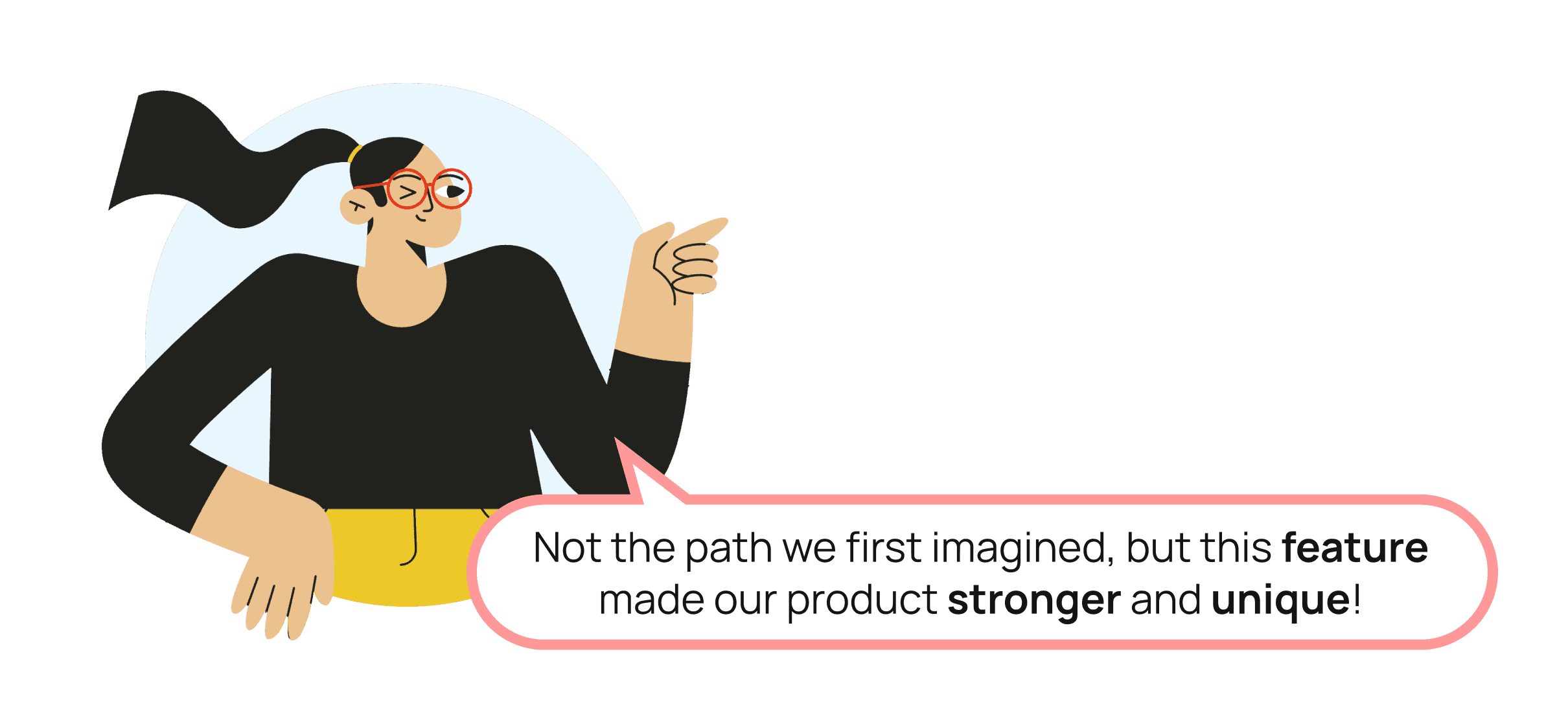
User feedback from our earlier sessions guided both refinements and a major feature expansion.



Creating the "Similar Creator" Flow
What We Heard: Marketers wanted an easy way to discover creators related to the ones they already liked.
What I built:
Flow where users can add similar creators (individually or in bulk) to their list.
Designed interactions and loading states so users know when a creator is added.
Prototype Walkthrough
Designing Around Constraints
To get here, I had to work around a few challenges:
Suggestions came from content overlap (not marketer filters), so results often fell outside the original list.
To access insights for new creators, developers needed to run a separate analysis.
Task Flow: Adding Similar Creators

This flow shows how users can add similar creators step by step, while keeping the design feasible for devs.
Impact
Gave marketers a way to expand searches beyond the first list.
Balanced discovery needs with developer constraints.
Step 4: Solution
Bringing It All Together
After rounds of research, feedback, and design updates, FindCreator finally came to life.
How to Use
to navigate
R
to restart
Try it Out!
You’ll be exploring two profiles to see how discovery expands beyond the original list:
part of the original list
once you add them to list
Want to have a closer look? Access file here.
How is FindCreator Doing Today?
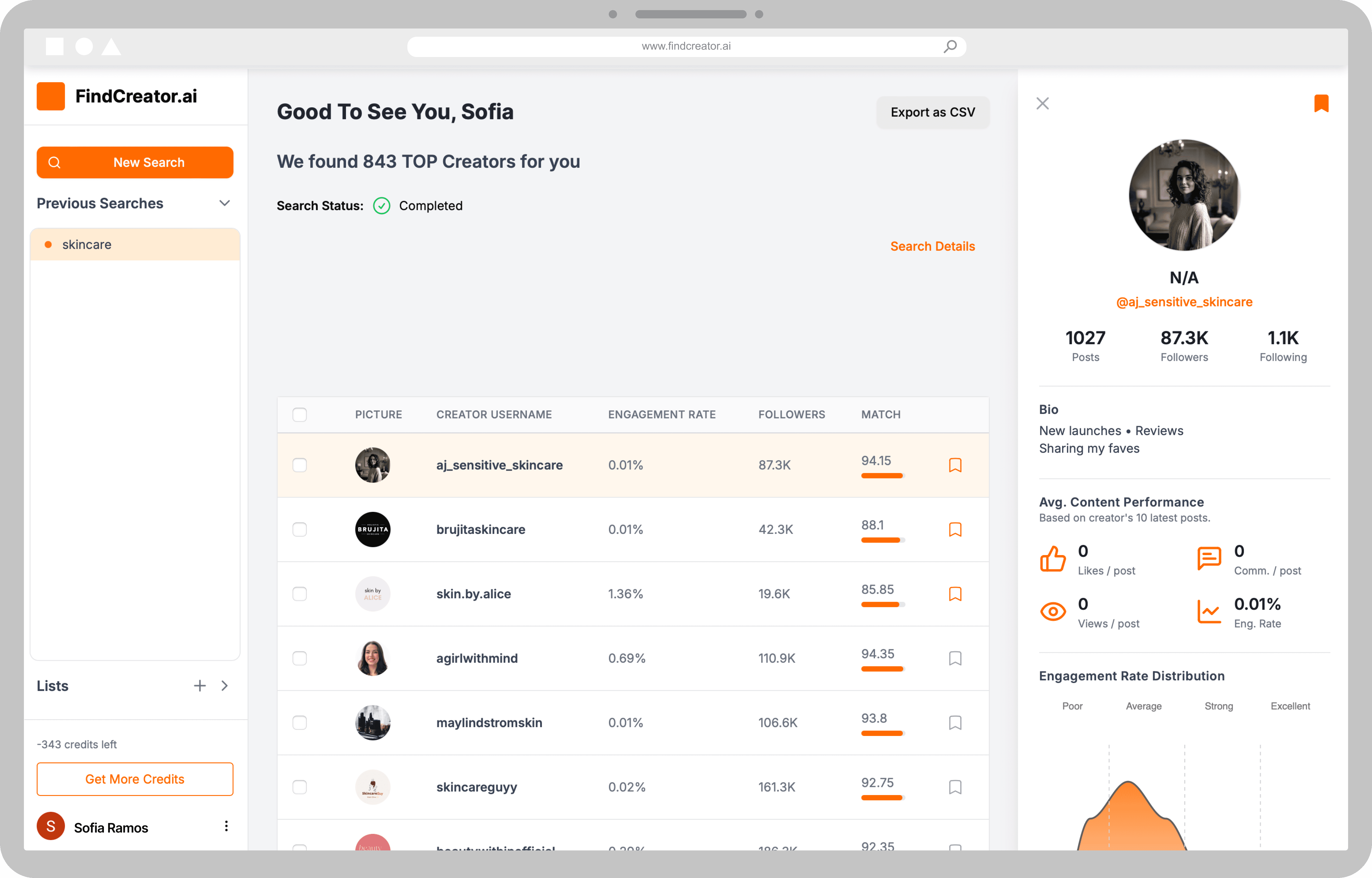
FindCreator is live today (free with limited searches) but still evolving. Even without promotion, some users are coming back to run multiple searches, a strong sign we’re onto something.
Want to See FindCreator? Click here.
Step 5: Outcome
Growth & Learnings
The product is live, but we’re not done yet. We’re learning as we go and planning what’s next.
Next Steps
Check what’s working
Run another round of feedback to see how users respond to the latest updates, and adjust where needed.
Complete the flow
Reintroduce Save for Later so users can keep track of favorites and finish the initial discovery flow.
Grow the reach
Test light marketing to boost visibility and bring in new users, starting to measure impact and retention.
Measure Impact
Return rate
Are people creating extra accounts just to keep using the tool? (We’ve already seen this happen.)
Engagement
Do users go back to the Similar Creators feature and use it across multiple sessions?
Behavior
Once Save for Later launches, are users saving more from the original results or from the suggested creators?
Key Learnings
Constraints spark creativity
Working with limited dev resources pushed me to simplify flows and design solutions that were user-friendly and technically feasible.
Big features reshape flows
Adding Similar Creators wasn’t just a new screen, it reshaped the user flow, showing how big changes need to be weighed carefully.
Good UX goes beyond screens
States and micro-interactions aren’t just nice-to-have. They guide people, reduce friction, and make the product feel trustworthy.
Conclusion
Working on FindCreator meant designing under startup constraints while constantly checking ideas with developers to see what was feasible. I also learned the importance of asking stakeholders about their vision and making sure each feature added real value. Those conversations sparked new ideas and turned the product from a basic AI-powered search into a more personalized experience that continues to evolve with marketers’ needs.
Check this one!
Pssss!